You Won’t Believe How Arles Turns Art Into Life
Arles, France, isn’t just a dot on the map—it’s a living canvas. I didn’t expect much beyond sunflowers and old stones, but walking its cobbled streets felt like stepping into a Van Gogh painting. The light, the colors, the rhythm of daily life—it all pulses with creativity. From ancient amphitheaters to hidden courtyards buzzing with exhibitions, art here isn’t locked in galleries. It spills into cafes, alleyways, and riverbanks. This is cultural immersion at its most authentic. In Arles, every stone, shadow, and sunbeam feels curated by time and touched by imagination. It’s not merely a destination for art lovers; it’s a place where art becomes the language of everyday life.
First Impressions: Where History Meets Hue
Arriving in Arles, one is immediately struck by the quality of light—a golden, almost liquid glow that bathes the city in a warm, painterly haze. This is the Provençal sun at its most dramatic, casting long shadows and intensifying colors in a way that feels both natural and surreal. The city greets visitors not with polished tourist facades, but with a lived-in authenticity. Ancient Roman stones rest beneath blooming bougainvillea, and centuries-old doorways open into sunlit courtyards where the past and present coexist without pretense. Unlike more commercialized destinations, Arles doesn’t perform heritage; it lives it, breathes it, and wears it with quiet pride.
At the heart of this layered identity stands the Arles Amphitheater, a remarkably preserved Roman structure that dates back to the 1st century AD. Still used today for bullfights, concerts, and cultural events, the amphitheater exemplifies Arles’ philosophy: history is not a relic to be observed from behind glass, but a dynamic part of community life. Visitors can climb its arched corridors, feel the cool stone beneath their hands, and imagine gladiators beneath the same sky that now hosts open-air performances. The continuity is palpable—centuries of stories echo in its walls, yet the space remains vibrantly alive.
The city’s urban fabric reflects this same harmony of old and new. Narrow lanes wind past boutiques housed in medieval buildings, while modern art installations nestle beside 12th-century chapels. The Théâtre Antique, another Roman landmark, hosts summer music festivals beneath a star-strewn sky, its weathered columns framing contemporary performances. This seamless integration of past and present creates a sense of timelessness, where every turn reveals a moment suspended between history and imagination. Arles does not cling to nostalgia—it evolves, yet never loses its soul.
What makes Arles truly unique is its resistance to becoming a museum-city. While other historic towns curate their charm for visitors, Arles remains a working city, home to families, artisans, and shopkeepers who go about their lives amid the beauty. Children play near ancient fountains, bakers open their ovens at dawn, and elders sip coffee in sun-dappled plazas. This authenticity invites deeper connection. Tourists don’t just observe culture—they become part of its rhythm, even if only for a few days. In Arles, heritage isn’t performed; it’s lived, one ordinary, extraordinary moment at a time.
Van Gogh’s Footsteps: Tracing Artistic Legacy
Vincent van Gogh’s time in Arles was brief—just over a year, from 1888 to 1889—but his emotional and artistic imprint on the city is profound. Drawn by the intense southern light and the vibrant colors of Provence, Van Gogh arrived seeking inspiration and solace. During his stay, he produced over 300 works, including some of his most celebrated paintings. Though the originals now reside in museums around the world, their spirit lingers in the very air of Arles. Walking through the city, one doesn’t merely learn about Van Gogh; one feels his presence in the way sunlight hits a café wall or how the Rhône River shimmers at dusk.
The reconstructed Yellow House, located at 2 Place Lamartine, stands as a quiet homage to the artist’s vision. Though the original building was destroyed during World War II, the modern façade is painted in the same vivid yellow, marked only by a small plaque acknowledging its significance. It was here that Van Gogh dreamed of creating an artists’ colony, a place where creatives could live and work together in harmony. Though that dream was never realized, the idea lives on in Arles’ enduring support for artistic expression. Nearby, Café Van Gogh—formerly Café du Forum—retains its 19th-century charm, its outdoor tables arranged much as they were when Van Gogh painted *The Night Café*, capturing its warm, almost oppressive interior glow.
One of the most moving experiences in Arles is walking along the Rhône River at twilight, following the path Van Gogh once took. It is here, on the banks of the gently flowing water, that he painted *Starry Night Over the Rhône*, a masterpiece of celestial reflection and quiet contemplation. Standing at the same spot, with gas lamps flickering along the quay and stars beginning to appear, offers a rare emotional resonance. The scene is not recreated; it is remembered. The city does not need to dramatize Van Gogh’s legacy—its natural beauty and light do the work for him.
Arles honors Van Gogh not through grand monuments, but through preservation and quiet reverence. The Fondation Vincent van Gogh Arles, housed in a restored 18th-century mansion, presents contemporary exhibitions inspired by his work, bridging past and present. Rather than treating him as a distant icon, the city engages in an ongoing dialogue with his artistic questions—about color, emotion, and the sacredness of ordinary moments. In Arles, Van Gogh is not frozen in time; he is part of a living conversation, one that continues to inspire artists, visitors, and locals alike.
Les Rencontres d’Arles: When Photography Takes Over
Each summer, Arles undergoes a remarkable transformation. The streets, courtyards, and historic buildings become stages for one of the most prestigious photography festivals in the world—Les Rencontres d’Arles. Founded in 1970, the festival has grown into a global cultural event, attracting photographers, curators, and art lovers from every continent. Yet despite its international acclaim, the festival retains a distinctly local spirit. Exhibitions are not confined to traditional galleries; instead, they spill into unexpected spaces—abandoned chapels, Roman ruins, converted warehouses—turning the entire city into an open-air museum.
The genius of Les Rencontres d’Arles lies in its ability to merge contemporary visual storytelling with the city’s architectural heritage. A 12th-century cloister might host a powerful series on climate migration, while a former bread oven displays intimate portraits of rural life. These juxtapositions create a dialogue between past and present, between form and content. Visitors don’t just view photographs—they experience them in context, surrounded by centuries of history. The festival’s curators deliberately choose locations that enhance the emotional weight of the images, allowing architecture to become part of the narrative.
Accessibility is central to the festival’s mission. Most exhibitions are free or available at a minimal cost, ensuring that art remains within reach of everyone, not just collectors or connoisseurs. Guided walks, artist talks, and workshops invite deeper engagement, fostering a sense of community and shared discovery. Evening projections on historic façades turn public squares into cinematic spaces, drawing families, couples, and solo travelers into collective moments of wonder. In a world where art can feel exclusive, Les Rencontres d’Arles insists on inclusivity, reminding us that powerful images belong to everyone.
Beyond the exhibitions, the festival energizes the city’s creative economy. Local cafés extend their hours, guesthouses fill with visitors, and spontaneous pop-up events emerge in unexpected corners. The atmosphere is electric yet relaxed—a celebration of vision, curiosity, and human connection. For photographers, it’s a rare opportunity to present work in meaningful, unconventional spaces. For visitors, it’s a chance to see the world through fresh eyes, to be moved by stories captured in a single frame. In July and August, Arles doesn’t just host a festival; it becomes a living gallery, a testament to the enduring power of the image.
Beyond the Main Streets: Hidden Cultural Corners
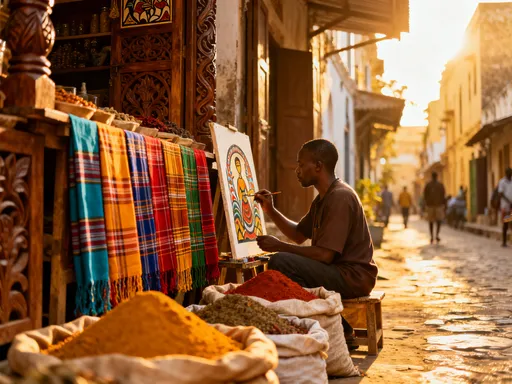
While the amphitheater and Van Gogh sites draw the crowds, Arles’ true magic often lies just off the beaten path. Venture beyond the central squares, and the city reveals quieter, more intimate artistic expressions. In narrow medieval alleys, small ateliers welcome passersby with open doors, offering glimpses into the creative process. A painter might be layering oil on canvas, a sculptor shaping clay, or a printmaker testing a new design. These are not performance studios for tourists; they are working spaces where art is born in solitude and shared in moments of spontaneous connection.
The Esplanade Saint-Laurent, a grassy promenade often overlooked by guidebooks, features rotating open-air installations that blend seamlessly with the natural landscape. A recent exhibition included suspended glass orbs that caught the sunlight like dewdrops, while another featured woven willow structures that echoed the region’s agricultural traditions. These works do not dominate the space; they converse with it, inviting quiet contemplation rather than spectacle. Locals stroll past with dogs, children weave through the sculptures, and the art becomes part of daily life—seen, absorbed, and appreciated without fanfare.
Even the city’s everyday spaces double as galleries. Neighborhood bakeries display paintings by regional artists above their pastry cases, while small bookshops host monthly readings in their back rooms. A pharmacy might have a rotating photo exhibit in its window, and a flower shop could feature ceramic vases made by a local artisan. These subtle integrations reflect Arles’ philosophy: art is not reserved for special occasions or elite spaces. It belongs in the fabric of ordinary life, enhancing the familiar without disrupting it.
One of the most delightful discoveries is the network of private courtyards, hidden behind unassuming doors, that open to the public during special events like Heritage Days. These serene spaces, often centuries old, are transformed into temporary exhibition halls, where contemporary works are displayed beside ancient fountains and climbing ivy. The contrast is striking—modern photography beside weathered stone, a video installation echoing in a vaulted chamber. These moments of surprise and serendipity define the Arles experience: beauty found not through planning, but through wandering, observing, and being open to the unexpected.
Arles Through the Seasons: A Calendar of Creativity
Arles’ cultural rhythm shifts beautifully with the seasons, each offering a distinct way to experience the city’s artistic soul. Spring arrives with a burst of color and renewal. Along the Rhône River, outdoor sculpture displays emerge, featuring works by emerging and established artists. The mild temperatures and blooming flora create an ideal setting for open-air installations, where nature and art intertwine. Walking the riverbank in April, one might encounter a steel figure reflecting in the water, or a mosaic bench embedded with local stones—a quiet invitation to pause and reflect.
Summer, of course, belongs to Les Rencontres d’Arles, but the season offers more than photography. Music festivals fill ancient courtyards with jazz, classical, and world music. Open-air dance performances take place beneath the stars, and poetry readings are held in shaded gardens. The city pulses with energy, yet maintains its composure—there are no overcrowded streets or chaotic venues, only a steady flow of cultural moments, each unfolding with grace. Evenings are particularly enchanting, when the heat subsides and the golden light returns, casting everything in a soft, nostalgic glow.
Autumn brings a more introspective mood. Literary gatherings take center stage, with authors and thinkers discussing philosophy, history, and storytelling in historic settings. The atmosphere is contemplative, ideal for deep conversations and quiet inspiration. Art studios open their doors for special viewings, and local markets feature handmade books, prints, and journals. The pace slows, allowing visitors to engage more deeply with the city’s creative offerings. It’s a season for reflection, for sipping tea in a sunlit café while reading a novel, or sketching the changing leaves in a notebook.
Winter, though quieter, is far from dormant. Craft markets showcase regional artisans—potters, weavers, and woodworkers—offering handmade gifts and decorations. Small gallery openings and studio tours provide intimate encounters with local artists. The city’s light, though softer, retains its clarity, perfect for photography and painting. And on cold mornings, the steam rising from café windows creates a scene worthy of a Impressionist canvas. In every season, Arles proves that art is not a seasonal event, but a constant presence, woven into the rhythm of daily life.
Local Life as Art: Cafés, Markets, and Rhythms
The true art of Arles is not confined to exhibitions or festivals—it lives in the gestures, routines, and spaces of everyday life. The morning market at Place Lamartine is a masterpiece of color, scent, and sound. Pyramids of ripe tomatoes, baskets of olives, and bundles of lavender create a living still life. Vendors call out greetings, children chase each other between stalls, and the aroma of fresh bread mingles with wild herbs. This is not a staged performance; it is real life, vibrant and unfiltered. To wander the market is to participate in a sensory celebration, one that has unfolded in much the same way for generations.
Sitting at a sidewalk café with a notebook or sketchpad becomes its own creative act. The pace of life here encourages observation—watching an elder unfold his newspaper, a dog napping in the sun, or the way light shifts across a stone wall. There is no pressure to produce; simply being present is enough. Locals do not perform tradition; they embody it. Their ease, their gestures, their unhurried conversations contribute to an atmosphere where inspiration feels effortless, almost inevitable.
Even the city’s sounds form a kind of music—the clink of coffee cups, the rustle of market awnings, the distant chime of church bells. These rhythms are not background noise; they are part of Arles’ artistic texture. A street musician might play accordion near the amphitheater, not for tips, but because the moment feels right. A painter sets up her easel by the river, not for sale, but to capture the light. In Arles, creativity is not a profession—it is a way of being.
This integration of art and life is what makes the city so deeply affecting. Visitors don’t just see beauty; they feel invited into it. There is no barrier between observer and participant. Whether buying cheese from a vendor, sketching a doorway, or sharing a table with strangers at a festival dinner, one becomes part of the living canvas. In Arles, art is not something you visit—it is something you join.
Practical Magic: How to Experience Arles Like a Cultural Insider
To truly connect with Arles, it’s best to shed the mindset of a checklist-driven tourist. The city rewards slowness, curiosity, and openness. Begin early in the morning, when the streets are quiet and the light is at its most magical. This is the hour when painters set up their easels and bakers open their ovens—the city waking up in soft focus. A morning walk along the Rhône offers solitude and reflection, with few other visitors to break the spell.
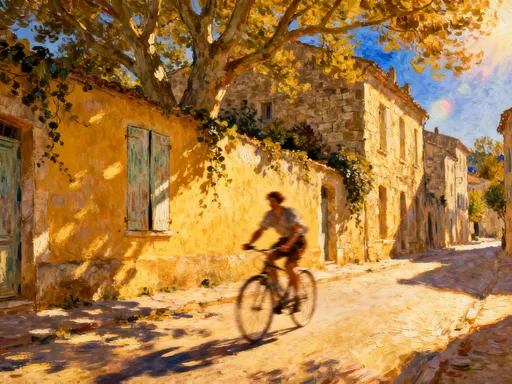
Renting a bicycle is one of the most rewarding ways to explore. Arles is compact, but a bike allows you to venture beyond the center—to the rice fields of the Camargue, where pink flamingos wade in shallow waters, or to the quiet trails along the riverbanks. These landscapes, with their wide skies and reflective marshes, were a source of inspiration for Van Gogh and remain so today. Cycling offers freedom and intimacy, letting you move at your own pace, stopping whenever a scene calls for attention.
Always carry the local festival guide, available at tourist offices and hotels. Many events during Les Rencontres d’Arles and other cultural seasons are free and require no advance booking. Some of the most memorable exhibitions are in lesser-known venues—a former convent, a private garden, a restored stable—places that might be missed without guidance. Attending an artist talk or evening projection can deepen your appreciation and connect you with fellow art lovers.
Consider staying in a guesthouse run by artists or creatives. Many offer not just accommodation, but conversation, local tips, and even studio visits. These hosts often know the best times to visit popular sites, hidden viewpoints, and quiet cafés where inspiration flows as freely as coffee. Most importantly, allow space for unplanned moments. Let yourself get lost in the alleys, accept an invitation to a small opening, or linger longer at a market stall. In Arles, the best experiences aren’t found on maps—they reveal themselves quietly, like brushstrokes on a blank canvas, one moment at a time.