Lost in the Amazon: My Check-In to Nature’s Last Frontier
Have you ever stood where the map ends? Iquitos, Peru, deep in the Amazon Rainforest, is exactly that place—remote, raw, and breathtakingly alive. As the world’s largest city unreachable by road, it’s a gateway to natural wonders few ever witness. From pink river dolphins to jungle canopies humming with life, this is nature in its purest form. My journey here wasn’t just a trip—it was a reset. Stripped of Wi-Fi signals and city noise, I found something far more valuable: presence. In a world increasingly defined by speed and screens, Iquitos offers a rare invitation—to slow down, to listen, and to remember that wonder still exists where the pavement stops.
Arrival in Isolation: Reaching Iquitos, the Unreachable City
Iquitos is not a place you stumble upon. Nestled along the banks of the Amazon River in northeastern Peru, it lies more than 2,000 miles from the Pacific coast, completely severed from the rest of the country by dense rainforest and impassable terrain. With no roads connecting it to major cities, the only ways to reach Iquitos are by plane or riverboat—routes that immediately signal you are entering a different kind of world. Most travelers arrive via a one-hour flight from Lima, descending through scattered clouds to glimpse a city cradled by winding brown water and endless green. Others choose the longer journey: a multi-day voyage upriver on cargo boats or passenger vessels that glide past remote villages, flooded forests, and the occasional caiman basking on the shore.
This isolation is not a flaw—it is Iquitos’ defining strength. Cut off from mass tourism and large-scale development, the city has preserved a cultural and ecological authenticity increasingly rare in the modern world. While urban life hums with motorbikes, open-air markets, and colonial architecture, just beyond the riverbanks lies one of Earth’s most vital ecosystems. The lack of road access has acted as a natural barrier, slowing deforestation and limiting industrial encroachment. As a result, Iquitos remains a vital access point to some of the most biodiverse regions on the planet. For travelers, this journey—whether by air or water—serves as a powerful psychological threshold. There are no last-minute errands, no final emails. You arrive not just in a new place, but in a new rhythm of life.
The city itself is a fascinating blend of resilience and resourcefulness. Founded during the rubber boom of the late 19th century, Iquitos still carries echoes of that era in its ornate buildings and cosmopolitan spirit. Yet today, its economy increasingly relies on sustainable tourism, scientific research, and river-based trade. Locals speak Spanish with a distinct Amazonian lilt, and many families have lived in the region for generations, maintaining deep ties to the river and forest. Visitors quickly learn that time moves differently here—appointments are fluid, schedules are suggestions, and patience is a daily practice. But this is not inefficiency; it is a cultural adaptation to an environment where nature sets the pace.
First Glimpse of the Amazon: Stepping Into the World’s Largest Rainforest
Leaving Iquitos behind, the real journey begins with the first step onto a jungle trail. The transition is immediate and profound. The air thickens with humidity, carrying the scent of damp earth, blooming flowers, and decaying leaves—a perfume of life in constant renewal. Sunlight filters through the canopy in fractured beams, illuminating swarms of insects and the occasional flash of iridescent wings. Towering ceiba trees rise like cathedral pillars, their buttress roots spreading wide across the forest floor. This is not a park or a reserve in the traditional sense; it is a living, breathing entity that has existed for millions of years.
For many, the sensory overload is overwhelming. The sheer volume of life—visible and invisible—is unlike anything experienced in urban environments. Every step stirs the undergrowth, releasing chirps, rustles, and the distant howl of monkeys. A guide’s quiet whisper can send shivers down your spine: “Look up—there’s a sloth in the canopy.” Or, “Stay still—anaconda territory ahead.” These moments underscore a crucial truth: this is not a zoo or a curated exhibit. The Amazon operates on its own terms, and humans are merely guests.
Most visitors explore the rainforest through guided excursions into protected areas such as the Pacaya-Samiria National Reserve, one of the largest flooded forest ecosystems in the Amazon basin. These tours are not optional—they are essential. Local guides, often raised in nearby river communities, possess intimate knowledge of the terrain, wildlife behavior, and plant uses that no textbook can replicate. They teach how to identify poison dart frogs by their bright coloring, point out medicinal plants used for generations, and explain the delicate balance between predator and prey. Their presence ensures safety while also supporting community-based conservation efforts.
Responsible tourism plays a critical role in preserving this fragile environment. Unlike mass tourism models that degrade natural sites, eco-conscious travel in the Amazon emphasizes low impact, education, and mutual respect. Visitors are encouraged to follow strict guidelines: staying on marked trails, avoiding loud noises, and never feeding or touching wildlife. These practices may seem small, but collectively, they help protect an ecosystem that produces 20% of the world’s oxygen and houses an estimated 10% of all known species. To walk through the Amazon is to witness evolution in action—but it is also to accept a responsibility: to tread lightly, and to leave only footprints.
Meeting the River Giants: Swimming With Pink Dolphins
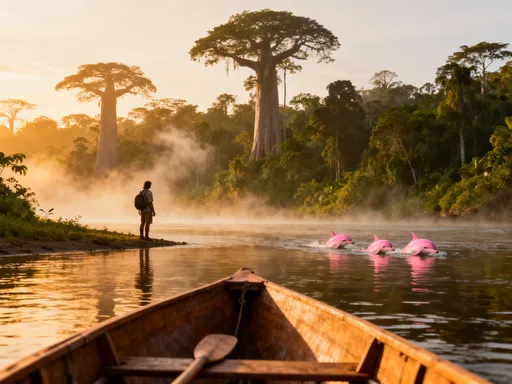
Among the most magical experiences in the Peruvian Amazon is encountering the Amazon river dolphin—locally known as the *boto*. These elusive creatures, distinguished by their pale pink hue and flexible necks, glide through the murky waters with an almost ghostly grace. Unlike their oceanic cousins, river dolphins navigate narrow tributaries and flooded forests, using echolocation to hunt fish beneath tangled roots and submerged logs. Seeing one breach the surface—its rosy skin glistening in the sunlight—is a moment of pure awe.
Some eco-tours offer the rare opportunity to swim with these gentle mammals in designated areas where interactions are carefully monitored. Floating in the warm, tea-colored water, you may feel a curious nudge from below or catch sight of a pair of intelligent eyes watching from a few feet away. These encounters are not staged performances; they occur only when dolphins approach voluntarily, respecting their autonomy and natural behavior. Guides emphasize silence and stillness, allowing the animals to initiate contact. When a *boto* lingers nearby, circling slowly or blowing a soft spout of air, the experience feels less like observation and more like communion.
The pink dolphin holds deep cultural significance for many indigenous communities. Legends speak of the *boto* transforming into a handsome man at night, wearing a hat to conceal its blowhole, and seducing villagers—a myth that underscores the animal’s mystique and spiritual importance. While modern science has demystified some of these tales, the reverence remains. The *boto* is seen as a guardian of the river, a symbol of the unseen forces that govern the Amazon’s waters.
Yet this iconic species faces growing threats. Habitat degradation, pollution from illegal gold mining, and accidental entanglement in fishing nets have led to declining populations. Conservationists warn that without stronger protections, the pink dolphin could vanish from parts of its range within decades. Tourism, when managed responsibly, can help reverse this trend. Entrance fees to protected areas fund anti-poaching patrols and environmental monitoring. Local guides educate visitors about the dolphin’s plight, turning a single swim into a catalyst for awareness. By choosing ethical operators and respecting wildlife boundaries, travelers become allies in preservation—proving that wonder and stewardship can go hand in hand.
Night Walks & Hidden Wildlife: Discovering the Jungle After Dark
As dusk settles over the Amazon, a transformation unfolds. The daytime chorus of birds and monkeys fades, replaced by the rising symphony of nocturnal life. This is when the jungle reveals its true character—not as a passive landscape, but as a pulsing, dynamic world teeming with movement and sound. Night walks, led by experienced guides with headlamps and sharp eyes, offer an intimate glimpse into this hidden realm.
Within minutes of stepping onto the trail, the forest comes alive in unexpected ways. Eyes gleam from the underbrush—sometimes small and green, sometimes large and reflective, belonging to creatures that remain just out of sight. A guide’s beam of light might catch a tarantula perched on a tree trunk, its hairy legs motionless against the bark. Nearby, a leaf-tailed gecko blends perfectly into its surroundings, a master of camouflage. High above, kinkajous—tree-dwelling mammals with large eyes and prehensile tails—shuffle through the branches in search of fruit.
Frogs emerge in astonishing variety. Bright red poison dart frogs, no larger than a thumbnail, hop across damp leaves, their vivid coloring a warning of toxicity. Glass frogs, nearly transparent, cling to leaves with delicate fingers, their internal organs faintly visible. And in the water, caimans—smaller relatives of crocodiles—float with only their eyes and nostrils above the surface, waiting for an unwary fish. Each discovery is met with quiet excitement, a shared moment of discovery between guide and traveler.
Safety is paramount during night excursions. Guides carry long sticks to probe the path ahead and warn of potential hazards like snakes or unstable ground. Visitors are instructed to stay close, avoid touching plants or animals, and wear closed-toe shoes. While the Amazon is not inherently dangerous, respect for its inhabitants is non-negotiable. The goal is not to disturb, but to observe—to witness the intricate web of life without unraveling it. For many, the night walk becomes the most memorable part of the trip. Stripped of visual dominance, other senses sharpen. You hear the rustle of wings, smell the damp richness of the soil, feel the cool mist rising from the river. In the darkness, the jungle feels infinite, ancient, and profoundly alive.
Life on the Water: Staying in a Jungle Lodge by the River
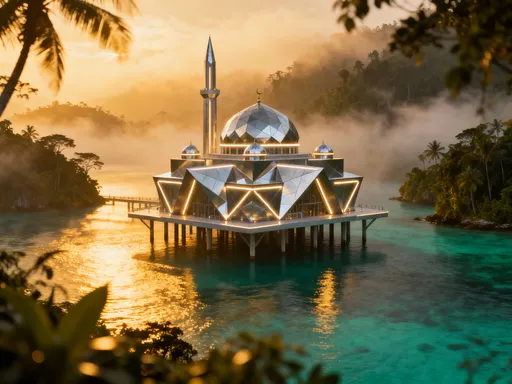
To truly immerse yourself in the Amazon, few experiences compare to staying in a jungle lodge. Perched on stilts along the banks of the Amazon or its tributaries like the Nanay or Yanayacu rivers, these eco-friendly accommodations blend comfort with authenticity. Constructed from sustainable wood and thatch, they are designed to minimize environmental impact while maximizing connection to nature. There are no room service buttons or minibars—instead, days unfold in harmony with the rhythms of the forest.
Mornings begin before sunrise. The first light paints the river in shades of gold and amber as birds launch into their dawn chorus. Guests sip herbal tea on wooden decks, watching pink dolphins surface in the distance or families of capybaras grazing near the shore. Canoe rides at first light offer unparalleled stillness—gliding through narrow waterways where giant water lilies float and hoatzins, strange-looking birds with spiky crests, clamber through low branches. These early hours are often the best for spotting wildlife, as animals emerge to feed and drink.
Meals are a celebration of Amazonian cuisine. Breakfast might include fried plantains, fresh papaya, and *juane*—a traditional dish of rice, meat, and spices wrapped in banana leaves. Lunch and dinner feature locally sourced fish such as *paiche*, one of the largest freshwater fish in the world, often grilled with lemon and herbs. Vegetables are harvested from nearby gardens, and drinks are made from native fruits like *aguaje* and *camu camu*, rich in vitamin C. Dining is communal, fostering conversation among guests and staff, many of whom are from surrounding communities.
Evenings are spent listening to the rainforest soundtrack—frogs, insects, and distant howls—while stargazing from open-air lounges. Without light pollution, the night sky blazes with stars, a reminder of how vast the world truly is. Some lodges offer storytelling sessions, where guides share local legends or explain constellations as seen through indigenous cosmology. There is no television, no Wi-Fi, no distractions—only the presence of the moment. For many guests, this digital detox becomes a form of healing. The constant buzz of notifications gives way to the rustle of leaves. The pressure to perform fades into the simplicity of being. In the embrace of the jungle, time slows, and the soul recalibrates.
Connecting With Local Culture: Indigenous Communities and Sustainable Tourism
Beyond the wildlife and wilderness, one of the most enriching aspects of visiting Iquitos is engaging with the region’s indigenous communities. Groups such as the Yagua, Bora, and Ticuna have lived in harmony with the Amazon for centuries, developing profound knowledge of its plants, animals, and rhythms. Many eco-tours include visits to riverside villages, where families welcome guests with open arms, sharing traditions that have been passed down for generations.
These cultural exchanges are rooted in respect and reciprocity. Visitors may learn how to weave baskets from palm fibers, carve traditional masks, or prepare natural remedies using medicinal plants. Elders explain the significance of the *ayahuasca* vine—not as a tourist attraction, but as a sacred element of spiritual practice, used only in ceremonial contexts by trained healers. Children demonstrate how to use blowguns, once essential for hunting, now preserved as cultural heritage. These interactions are not performances; they are invitations into a way of life that values balance, community, and reverence for nature.
Sustainable tourism plays a vital role in supporting these communities. Entrance fees, handicraft sales, and homestay programs provide income that reduces reliance on destructive practices like illegal logging or overfishing. When tourism is community-led, profits stay local, funding schools, health clinics, and conservation projects. More importantly, it affirms the value of indigenous knowledge in a world that often overlooks it. By choosing responsible tours, travelers help ensure that cultural heritage is not commodified, but honored.
Respectful engagement means following local customs—asking permission before taking photos, dressing modestly, and listening more than speaking. It means understanding that some rituals are not for outsiders to witness. True cultural exchange is not about extraction, but about connection. When done right, it fosters mutual understanding and lasting bonds. For many visitors, meeting a Yagua elder or sharing a meal with a Bora family becomes the emotional heart of the journey—a reminder that conservation is not just about protecting trees and animals, but about honoring the people who have守护 them for centuries.
Why Iquitos Matters: Protecting the Heart of the Amazon
Iquitos is more than a travel destination—it is a frontline in the global effort to protect the Amazon Rainforest. As climate change accelerates and deforestation rates climb, the preservation of this ecosystem has never been more urgent. The Amazon acts as the planet’s lungs, absorbing carbon dioxide and regulating weather patterns across continents. It is home to millions of species, many still undiscovered, and provides vital resources for indigenous peoples and the world alike. Yet it faces relentless pressure from logging, agriculture, mining, and infrastructure projects that fragment its landscape.
Travel to places like Iquitos, when done thoughtfully, can be a force for good. Every responsible visitor supports conservation through park fees, eco-lodge stays, and local guides. Every story shared—of swimming with pink dolphins, walking beneath ancient trees, or learning from indigenous elders—becomes a ripple of awareness. Tourism creates economic alternatives to destructive industries, proving that forests are more valuable alive than cut down.
But this requires intention. Travelers must choose operators committed to sustainability, avoid single-use plastics, and respect wildlife boundaries. They must listen to local voices and support community-led initiatives. The goal is not to conquer the jungle, but to coexist with it—to move through it with humility and gratitude.
In the end, a journey to Iquitos is not just about seeing the Amazon. It is about remembering our place within it. It is about recognizing that nature is not a resource to exploit, but a web of life to which we belong. In a world of noise and haste, the rainforest teaches stillness. In a time of disconnection, it offers belonging. To stand where the map ends is to realize that some of the most important journeys begin not with a destination, but with a return—to wonder, to balance, to the quiet truth that we are all part of something greater.