What I Found in Haifa Will Blow Your Mind
Haifa isn’t just another stop on the map—it’s a cultural mosaic where East meets West in the most unexpected ways. I went looking for sights, but left with stories. From the scent of cardamom coffee in Arab markets to the rhythm of jazz spilling from hidden alleyway cafés, every moment felt alive. This city doesn’t shout; it whispers its secrets. And once you listen, you’ll never see the Middle East the same way again.
Arrival in a City of Layers
Descending into Haifa from the north, the city unfolds like a tapestry stitched into the slopes of Mount Carmel. The Mediterranean Sea stretches to the horizon, its blue shimmering under the morning sun, while the hills rise in gentle terraces, dotted with homes painted in soft ochre, white, and sandstone. What strikes visitors first is not just the beauty of the landscape, but the quiet harmony embedded in its urban fabric. Unlike many cities shaped by division, Haifa feels like a place where difference isn’t tolerated—it’s woven into daily life.
The city’s geography plays a crucial role in shaping its character. Built across steep hillsides, Haifa naturally separates neighborhoods by elevation, yet connects them through a network of staircases, cable cars, and winding roads. This vertical layout fosters intimacy—residents of different backgrounds often live within sight of one another, their lives overlapping in markets, parks, and public transport. The air carries a blend of sea salt and jasmine, and the pace of life feels measured, not rushed. There’s a sense of breathing room, even in the busiest districts.
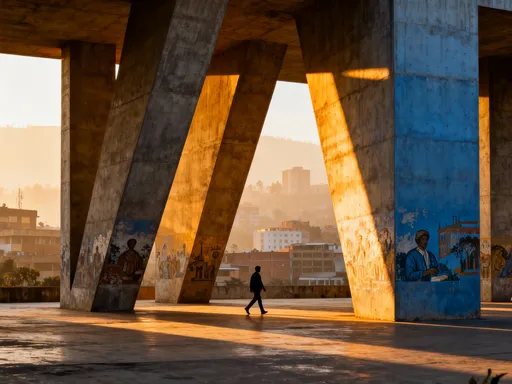
Architecturally, Haifa is a living museum of layered histories. Ottoman-era stone houses with arched windows sit beside Bauhaus-inspired modernist buildings from the early 20th century. Some structures still bear the marks of the German Templers, a Protestant sect that settled here in the 1860s, their influence lingering in the sturdy brickwork and gabled roofs. Yet there is no nostalgia that feels frozen in time. These buildings are not relics—they are homes, shops, studios, alive with contemporary purpose. The coexistence of styles mirrors the coexistence of people: distinct, yet part of a shared skyline.
Walking through central neighborhoods, one notices the unspoken ease with which cultures move alongside each other. A Muslim woman in a hijab might exchange greetings with an elderly Jewish man on a park bench. A group of Arab teenagers laughs outside a falafel stand while a Russian-speaking family queues for fresh bread. There are no grand declarations of unity, only the small, repeated gestures of everyday life—greetings, shared smiles, the nod of recognition. It’s this quiet rhythm that forms the foundation of Haifa’s identity, not as a utopia, but as a city that has learned to live with complexity.
Walking the Streets of Wadi Nisnas
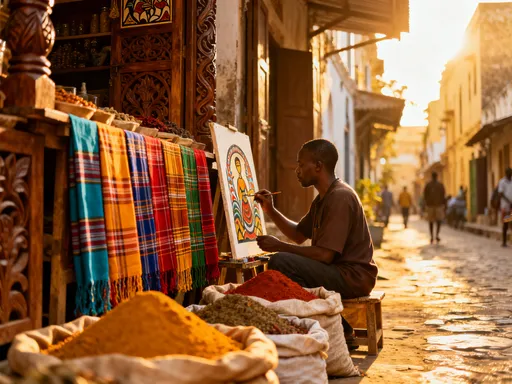
At the heart of Haifa’s Arab cultural life lies Wadi Nisnas, a neighborhood pulsing with color, sound, and history. As you step into its narrow streets, the air thickens with the scent of cumin, grilled meat, and freshly baked pita. Shop signs are written in flowing Arabic calligraphy, some illuminated at night with warm golden light. The rhythm of life here is both vibrant and unhurried—a man sips tea at a sidewalk table, another flips through a newspaper while playing backgammon with a friend. This is not a tourist performance; it’s a living community, proud of its heritage and deeply connected to the city at large.
Wadi Nisnas is best experienced on foot, allowing time to absorb the details: the hand-painted murals depicting Palestinian poets and musicians, the small bookshops selling Arabic literature, the women bargaining gently over prices at fabric stalls. Every corner tells a story—of displacement, resilience, and cultural continuity. Yet the neighborhood does not exist in isolation. It is a vital artery of Haifa, drawing visitors from all backgrounds who come not as outsiders, but as guests welcomed into the fold.
One of the most striking features of Wadi Nisnas is its thriving arts scene. Community-run galleries like Al-Midan Theatre and smaller independent spaces host regular exhibitions, film screenings, and performances. During the annual Summit of Arab Theatre, the streets transform into open-air stages, where actors recite classical and contemporary Arabic plays to mixed audiences. Music nights feature oud players and vocalists performing traditional muwashshahat, their melodies echoing off stone walls. These cultural expressions are not just for preservation—they are acts of dialogue, invitations to listen and understand.
What makes Wadi Nisnas truly special is how it balances tradition with engagement. Young artists blend Palestinian motifs with modern design, creating clothing, jewelry, and prints that speak to both roots and innovation. Local cafes serve strong Arabic coffee alongside craft lemonade, catering to a diverse clientele. There is no pressure to assimilate or erase identity; instead, there is space to be fully oneself while participating in the broader life of the city. In this way, Wadi Nisnas is not a pocket of separation, but a bridge—one built on art, flavor, and shared humanity.
The Baha’i Gardens: More Than Just Beauty
Rising in luminous tiers above the city, the Baha’i Gardens are often the first image associated with Haifa. Their symmetry, immaculate greenery, and golden-domed shrine at the center make them a visual masterpiece. But to see them only as a scenic attraction is to miss their deeper significance. The gardens are the spiritual and administrative heart of the Baha’i Faith, a religion founded in 19th-century Persia that teaches the essential oneness of humanity, the unity of all religions, and the equality of men and women. In a region often marked by division, the gardens stand as a quiet but powerful symbol of what peace could look like.
Visitors ascend the terraces in silence, not out of obligation, but out of instinctive respect. The atmosphere is meditative—children walk quietly beside parents, photographers lower their cameras to simply absorb the moment. People of all backgrounds—Jewish, Muslim, Christian, Druze, and international tourists—move through the space with a shared sense of reverence. There are no sermons, no proselytizing, only the invitation to pause and reflect. This inclusivity is intentional; the Baha’i Faith welcomes all to visit, regardless of belief, because its core message is one of universal belonging.
The upkeep of the gardens is itself a reflection of their values. Thousands of volunteer gardeners, many from Haifa’s diverse communities, contribute their time to maintain the lawns, prune the hedges, and care for the flowers. These volunteers include Jews, Arabs, and members of the Baha’i community, working side by side without hierarchy. Their labor is not paid, not coerced, but offered freely—a living example of cooperation rooted in shared purpose. The precision of the landscaping mirrors the precision of the faith’s principles: order, beauty, and unity in diversity.
At night, the gardens are illuminated in soft white light, glowing like a lantern on the hillside. From the promenade below, the view is breathtaking—a cascade of green and gold, perfectly balanced, yet never rigid. It’s a reminder that harmony does not require uniformity. The Baha’i Gardens do not erase difference; they frame it within a larger vision of connection. For travelers, this is more than a photo opportunity—it’s a moment of stillness that lingers long after the visit ends, a quiet challenge to imagine a world where coexistence is not the exception, but the norm.
A Morning at the German Colony
Nestled on the lower slopes of Mount Carmel, the German Colony offers a different rhythm—one of quiet elegance and creative reinvention. Established in the mid-1800s by the Templers, a group of German Pietists seeking a religious life in the Holy Land, the neighborhood was once a self-contained enclave with its own schools, church, and bakery. Today, those original stone villas, with their red-tiled roofs and arched doorways, have been transformed into art galleries, design studios, and boutique cafes. The cobblestone streets, once trod by robed missionaries, now echo with the footsteps of artists, writers, and young families enjoying weekend brunch.
The transformation of the German Colony is a testament to Haifa’s ability to repurpose history without erasing it. The architecture remains largely intact, preserving the European character of the area, but the spirit has shifted toward openness and experimentation. A former Tractarian chapel now houses a contemporary art space, where mixed-media installations explore themes of migration and memory. Design shops sell handmade ceramics, textiles, and furniture that blend German craftsmanship with Middle Eastern patterns and materials. There is a sense of thoughtful curation—nothing feels accidental, yet nothing feels forced.
Culinary culture thrives here, reflecting the neighborhood’s hybrid identity. At a corner bakery, you can order zwieback—a traditional German double-baked bread—alongside za’atar manakish, a Levantine flatbread seasoned with thyme and sumac. Baristas serve flat whites to customers reading Arabic poetry or sketching in notebooks. On weekends, farmers’ markets pop up with vendors selling organic honey, homemade labneh, and sourdough bread baked in wood-fired ovens. The food is not fusion for spectacle, but a natural evolution of what happens when cultures live side by side for generations.
What stands out in the German Colony is the atmosphere of creative calm. Unlike the bustling energy of Tel Aviv or the ancient intensity of Jerusalem, Haifa’s artistic quarter feels grounded, almost domestic in its charm. Artists speak of the city as a place where inspiration flows not from chaos, but from coexistence. One painter described her work as “a dialogue between light and shadow, like Haifa itself—bright, but never blinding.” It’s a fitting metaphor for a neighborhood that honors its past while embracing a fluid, inclusive future.
Taste of Coexistence: A Market Experience
No place in Haifa captures the soul of the city quite like the Carmel Market. From early morning until late afternoon, this sprawling bazaar hums with activity—vendors call out prices, baskets overflow with ripe figs and pomegranates, and the scent of roasted nuts and fresh herbs fills the air. What makes this market extraordinary is not just its abundance, but the quiet way it brings people together. Russian-speaking elders haggle over eggplants, Arab farmers sell organic za’atar, and young Israeli couples sip fresh juice while browsing handmade soaps. Here, identity is not a barrier—it’s part of the conversation.
Food in Haifa is more than sustenance; it’s a language of connection. Falafel stands serve both crispy chickpea balls and mujadara, a lentil-and-rice dish beloved across the Arab world. Hummusiyas are packed at noon, their walls covered in photos of satisfied customers—Jewish grandmothers, Arab students, foreign tourists—all united by a love of creamy tahini and warm pita. At one stall, an elderly Jewish woman teaches a teenage boy how to properly sprinkle cumin on his sandwich. It’s a small moment, but it speaks volumes about the culture of sharing that defines the city.
I joined a cooking workshop hosted by a women’s collective that brings together Jewish and Arab chefs to teach traditional dishes from both cultures. In a sunlit kitchen near the port, we prepared maqluba—a Palestinian dish of spiced rice, eggplant, and chicken—and shakshuka, the North African tomato stew now beloved across Israel. The women led the class with warmth and humor, correcting each other’s techniques, laughing at mistakes, and insisting we taste everything. As we sat down to eat, one participant said, “We don’t solve wars in this kitchen. But we remember that we share the same table.”
This is the essence of Haifa’s food culture: not forced integration, but natural intermingling. Meals are not political statements; they are acts of trust and generosity. When an Arab baker gives a free piece of baklava to a Jewish child, or when a Jewish shopkeeper learns to greet his customers in Arabic, these are quiet affirmations of belonging. In a world where food is often weaponized or commercialized, Haifa reminds us that a shared meal can be one of the most powerful forms of peacebuilding.
Nightlife with a Soul: From Jazz to Poetry
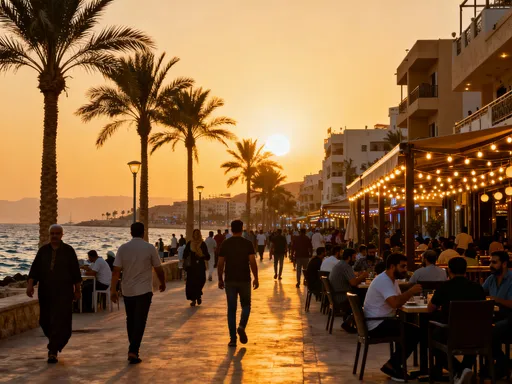
As the sun sets over the Mediterranean, Haifa’s cultural pulse quickens—but not with the roar of nightclubs or crowded bars. Instead, the city’s nightlife thrives in intimate spaces where art and conversation take center stage. At Zhan Club, a small venue tucked into a side street near the port, Arab jazz musicians improvise alongside Israeli saxophonists, their rhythms blending Arabic maqams with American blues. The audience, a mix of students, artists, and longtime residents, listens intently, sipping mint tea and local wine. There are no speeches about unity—just music that moves beyond language.
Other nights bring poetry slams, often held in trilingual format—Hebrew, Arabic, and English. At a recent event in a converted warehouse, young performers took turns reciting original works on identity, memory, and hope. One poet, of Druze heritage, spoke of growing up in a village where silence was valued, yet found her voice through writing. Another, a Jewish woman from Haifa’s eastern neighborhoods, read a piece about walking through Wadi Nisnas and realizing how much she had misunderstood. The room listened in rapt attention, not because the poems offered answers, but because they asked honest questions.
These underground scenes are not attempts to erase differences, but spaces where differences can be explored without fear. Theater groups stage plays about displacement and reconciliation. Independent filmmakers screen documentaries on coexistence projects in schools and neighborhoods. Bookstores host readings by authors from mixed backgrounds, their works reflecting the complexity of life in a shared city. What unites these efforts is a belief in art as a bridge—not a solution, but a starting point.
For the youth of Haifa, creativity is not an escape from reality, but a way of shaping it. They are not waiting for politicians to make peace; they are building it in basements, cafes, and street corners. One organizer told me, “We don’t need permission to connect. We just need a stage, a microphone, and someone willing to listen.” In this spirit, Haifa’s nightlife is not about entertainment—it’s about transformation, one performance at a time.
Why Haifa Changes How You Travel
Traveling through Haifa reshapes the very idea of what a journey can be. In an age of curated Instagram moments and checklist tourism, this city invites something deeper: presence. It asks you to slow down, to listen to a street vendor’s story, to taste a dish without photographing it first, to sit in silence at the Baha’i Gardens and simply feel the weight of peace. Haifa does not offer spectacle for consumption; it offers connection for reflection.
What stays with you is not the landmarks, but the people—the woman who taught you how to roll grape leaves, the musician who let you try his oud, the teenager who corrected your Arabic with a smile. These encounters remind us that travel is not about seeing the world from a distance, but about stepping into it, however briefly. In Haifa, you realize that culture is not a performance for tourists—it’s a way of life, lived with pride, resilience, and generosity.
The city also challenges the myth that harmony must be perfect to be meaningful. Haifa is not without tensions, disagreements, or historical wounds. But it shows that coexistence is not the absence of conflict, but the daily choice to live alongside it with dignity and respect. It’s visible in the way neighbors greet each other, in the shared use of public spaces, in the willingness to learn each other’s languages and customs. These are not grand gestures, but small, repeated acts of courage.
For travelers, Haifa offers a new model: not of escape, but of engagement. It encourages us to seek destinations not for their postcard views, but for their human depth. It reminds us that the most transformative journeys are not across borders, but into understanding. And it proves that even in a region marked by division, there are places where people have chosen—quietly, persistently—to build something else.
Haifa doesn’t offer perfect harmony—but something more real: daily, imperfect, beautiful coexistence. It invites you not just to visit, but to listen, taste, and feel a different way of being together. In a world that often divides, Haifa quietly shows another path—one step, one meal, one conversation at a time.