Lost in the Light: Chasing Tahiti’s Soul Through Stillness
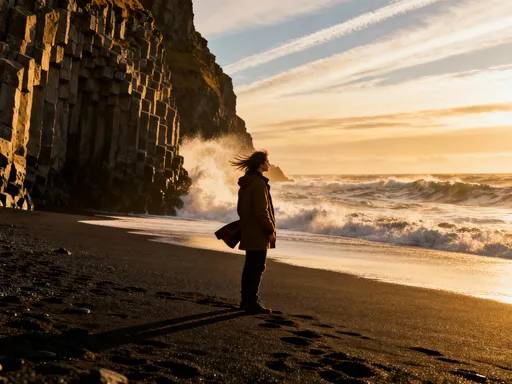
You know that feeling when a place just gets you? Tahiti wasn’t just a trip—it was a slow reveal. I went chasing views, but found something deeper: the way light dances on black sand at dawn, how mist clings to emerald peaks like secrets. This is more than scenery. It’s about presence. If you’re craving real connection—not just photo ops—this island’s quiet magic might just rewire your soul. More than a destination, Tahiti offers a rhythm, a way of seeing that lingers long after departure. It asks not that you admire it, but that you listen. And in doing so, you may find yourself heard in return.
First Glimpse: Arrival as Awakening
Touching down at Faa’a International Airport in Papeete, the first breath of Tahiti is unmistakable—a warm, fragrant embrace of salt-kissed air and gardenia blossoms drifting from the surrounding tiare trees. There is no abrupt transition into island time; instead, it seeps in. The moment you step off the plane, the pace shifts. The city hums with life—market vendors arranging pineapples and vanilla pods, children laughing in open-air courtyards, the steady beat of traditional pahu drums echoing from a community rehearsal. Yet even within this vibrancy, there is a quietude beneath the surface, a sense of deep-rooted calm that seems to emanate from the land itself.
Driving out of Papeete, the contrast becomes evident. The urban energy gradually gives way to emerald valleys carved by ancient volcanic forces. Coconut palms sway in unison with the breeze, and roadside stands offer fresh coconut water served in green husks with a sprig of mint. This is where the real immersion begins—not in curated tourist zones, but in the unhurried rhythm of daily life. The island does not perform for visitors; it simply exists, inviting those who come to shed their urgency and align with its tempo. What makes Tahiti different isn’t just beauty—it’s atmosphere. From the first moment, it begins to recalibrate your senses.
For travelers accustomed to fast-paced itineraries, this shift can feel disorienting. But that disorientation is part of the process. Tahiti resists being consumed like a checklist of attractions. Instead, it asks for presence. A woman weaving a flower crown at the market doesn’t rush for a photo op; she works with deliberate care, each petal placed with intention. This mindfulness is woven into the culture, and it becomes contagious. As you move deeper into the island, you begin to notice more—the way light filters through breadfruit leaves, the distant call of a reef heron at dusk, the subtle shift in wind before rain. These are not grand spectacles, but they are profound. They are the quiet language of place.
Arrival, then, is not just physical—it is emotional and sensory. It marks the beginning of a different kind of journey, one measured not in miles but in moments of awareness. Whether you're staying in a seaside bungalow or a family-run pension in the hills, the island’s spirit finds its way in. And once it does, the rest of the trip unfolds not as a series of events, but as a continuous unfolding of stillness and connection.
The Mountain Veil: Hiking into the Heart of Moorea
A short ferry ride from Tahiti, Moorea emerges like a dream rising from the Pacific—its jagged peaks cloaked in mist, its turquoise lagoon shimmering under the morning sun. Known as the “sister island,” Moorea offers a more intimate landscape, one where the mountains feel close enough to touch. The Belvedere Lookout trail is a moderate hike, accessible to most travelers with a reasonable level of fitness, yet it delivers one of the most breathtaking panoramic views in French Polynesia. But the true reward is not the vista at the top—it is the journey upward, a slow revelation of the island’s layered beauty.
The trail begins in a lush valley, where giant ferns unfurl beside the path and wild ginger blooms in bursts of crimson. As you climb, the air cools, and the sounds of the coast fade behind. Birdsong becomes more distinct—the melodic call of the ʻōʻō, a native honeyeater, flits through the canopy. The path is well-maintained but uneven in places, with natural stone steps and handrails where needed. It’s not a race; it’s a meditation in motion. Hikers are encouraged to pause, to breathe, to let the green envelop them. No filters can capture how intensely alive this island is. The vegetation pulses with color, from the deep jade of taro fields to the glossy sheen of banana leaves after a morning shower.
Reaching the first viewpoint, the Payari Lookout, the lagoon spreads out like a living map—shades of blue shifting from sapphire to aquamarine, broken only by coral heads and tiny motus (islets). But the real magic happens higher up, at Belvedere. On clear days, the twin peaks of Mount Rotui and Mount Tohivea stand in sharp relief. Yet the most powerful moments come when clouds drift in, wrapping the summits in silver mist. In those moments, visibility narrows, and the world feels smaller, quieter. It’s easy to forget you’re on a tourist trail. You could be the only person on the island.
Timing matters. Early morning hikes offer soft, diffused light—ideal for photography and cooler temperatures. Late afternoon brings golden hour, when the sun casts long shadows across the valleys. But the real secret is the in-between: the hours when weather shifts, when rain passes and the air is cleansed, when the mountains glisten with moisture and the light feels almost sacred. The best views aren’t seen—they’re earned through patience. And sometimes, the most profound experience is not seeing at all, but simply being present as the island breathes around you.
Beneath the Surface: Snorkeling in Living Color
If Tahiti’s above-ground beauty is poetry, its underwater world is an epic. The coral reefs surrounding the islands are among the most biodiverse in the Pacific, teeming with life in a spectrum of colors that seem almost unreal. At Tiahura Marine Reserve on Moorea, snorkeling is not just recreation—it is immersion in a living ecosystem. Floating above the reef, you become a silent observer in a world where movement is fluid, sound is muffled, and time slows. Parrotfish crunch on coral, their beak-like mouths leaving trails of white dust. A reef shark glides past, not with menace, but with the calm authority of a creature perfectly adapted to its domain.
The sensory shift is immediate. Above water, the sun is bright, the air warm. Below, everything changes. Sound becomes distant and distorted, replaced by the rhythmic crackle of snapping shrimp and your own steady breath. Colors intensify—coral in electric purples, sea fans in deep orange, anemones waving like dancers in the current. Even the water feels different—cooler, denser, alive with motion. For many visitors, this is the first time they’ve truly felt like guests in another world. And that awareness is essential. The reef is not a stage; it is a home.
Practical preparation enhances the experience. A well-fitting mask and snorkel are crucial—fog-resistant lenses and dry-top snorkels make a noticeable difference. Rash guards or wetsuits offer protection from the sun and minor scrapes. But perhaps the most important tool is restraint. Touching the coral, even gently, can damage delicate polyps. Feeding fish disrupts natural behaviors. The best practice is to observe without interference, to move slowly and with respect. Local guides often emphasize the concept of *mā’ohi*, a Polynesian value of harmony with nature. It’s not just a philosophy—it’s a way of being in the water.
Dawn dives offer a special kind of magic. In the early hours, fish are most active, and the light filters through the water in golden shafts. You might see a green sea turtle grazing on seagrass, its ancient eyes calm and unbothered. Or a school of convict tangs moving in perfect unison, their black-and-white stripes flashing like signals. These moments are fleeting, unrepeatable. They remind you that beauty is not something to be captured, but to be witnessed. Seeing isn’t believing here—it’s remembering we’re guests in a living world.
The Edge of the World: Focusing on Fakarava’s Atoll Silence
Far from the more visited islands, Fakarava offers a different kind of presence—one defined by vastness and stillness. A UNESCO Biosphere Reserve, this atoll is part of the Tuamotu Archipelago, a chain of low-lying coral rings scattered across the open ocean. Here, the horizon stretches uninterrupted, the sky meets the sea in a seamless arc, and the sense of isolation is profound. Unlike the mountainous landscapes of Tahiti and Moorea, Fakarava is flat, its beauty found in subtlety—the way light plays on shallow lagoons, the rhythm of tides moving through narrow passes, the silence that settles at dusk.
The northern pass, known as Tiputa, is one of the most renowned dive sites in French Polynesia. Twice daily, tidal currents funnel thousands of fish through the narrow channel, creating a natural spectacle. Reef sharks—gray, blacktip, and even the occasional tiger shark—gather in numbers rarely seen elsewhere. Snorkelers float at the edge, watching the underwater river of life surge past. But even more remarkable is the quiet that follows. When the current slows, the water calms, and the reef returns to its usual rhythm. In those moments, the absence of noise becomes its own kind of music.
Low-impact tourism is not just encouraged here—it is necessary. The fragile coral ecosystems and limited freshwater resources mean that development is carefully managed. Many accommodations are family-run pensions, where meals are shared at a communal table and stories are exchanged under the stars. There are no large resorts, no crowded beaches. The island’s guardians—local conservationists and community leaders—work tirelessly to protect its biodiversity. Volunteer programs allow visitors to participate in reef monitoring and sea turtle tracking, offering a deeper connection to the land and sea.
What makes Fakarava powerful is not what it offers, but what it withholds. There are no shopping districts, no nightlife, no distractions. Instead, there is space—space to think, to rest, to listen. In a world that constantly demands attention, this kind of emptiness is a gift. You begin to notice small things: the pattern of waves on the sand, the flight of a frigatebird overhead, the way your breath slows when you stop rushing. Space to see is space to think. And in that stillness, a different kind of clarity emerges.
Sacred Vistas: Understanding Marae and Landscape Memory
Tahiti’s landscapes are not just beautiful—they are storied. Scattered across the islands are marae, ancient ceremonial platforms built from coral and basalt. These were once centers of spiritual and community life, places where chiefs were crowned, prayers were offered, and knowledge was passed down. Unlike temples designed for worship in seclusion, marae were integrated into the natural world—positioned to align with mountains, stars, and ocean currents. To visit one is to step into a different way of seeing, where geography and spirituality are inseparable.
One of the most significant is Taputapuātea marae on Ra’iātea, a UNESCO World Heritage site and a cornerstone of Polynesian navigation culture. From here, voyagers once set sail in double-hulled canoes, navigating by the stars, the flight of birds, and the patterns of waves. The marae was not just a starting point—it was a living map, a repository of ancestral knowledge. Today, it stands as a testament to a worldview in which humans are not separate from nature, but part of its rhythm.
Visiting a marae is not about taking photos or checking a box. It is about respect. Visitors are asked to remove shoes, speak softly, and move with awareness. There are no dramatic reconstructions or theatrical reenactments—just stone, silence, and the weight of memory. Guides often share stories not as myths, but as teachings—lessons about balance, responsibility, and connection. The land remembers. The ocean remembers. And in their presence, you begin to remember too.
These sites challenge the modern tourist mindset, which often seeks novelty and spectacle. The marae offer none of that. Instead, they invite contemplation. They ask you to slow down, to listen, to recognize that some things cannot be seen with the eyes alone. To see Tahiti fully, you must learn to read its silence. And in doing so, you may begin to understand that true beauty is not in the view, but in the relationship between the viewer and the viewed.
Chasing Light: Sunset, Storms, and the Rhythm of Rain
In Tahiti, weather is not an interruption—it is part of the performance. There is no such thing as a “bad day” for viewing, only a different kind of beauty. I remember one afternoon on Moorea, sitting on a wooden deck overlooking Cook’s Bay, when a sudden downpour swept across the lagoon. Within minutes, the air was cool, the light diffused, and a double rainbow arched across the valley, its colors so vivid they seemed painted on the sky. No one reached for a camera right away. We just watched, awed by the island’s effortless drama.
These moments redefine what a “perfect view” means. It is not the postcard sunset, though those are abundant—golden skies melting into the horizon, palm silhouettes sharp against the glow. It is also the storm light, the mist rising from the mountains after rain, the way the ocean turns silver when clouds pass overhead. Tahiti does not perform—it simply is. And its true character reveals itself in these transient, unrepeatable moments.
For photographers, this means embracing unpredictability. A tripod helps in low light, and a polarizing filter can enhance contrast during rainbows. But more important is mindset. Instead of chasing the ideal shot, try waiting for the moment to come to you. Sit by the water at dawn. Walk the same trail at different times. Let the island show you what it wants to reveal. You’ll find that the most powerful images are often the ones you didn’t plan.
For all travelers, this rhythm offers a lesson in acceptance. Life, like weather, is unpredictable. But within that unpredictability lies beauty. The island does not resist change—it flows with it. And in doing so, it remains whole. By learning to move with its rhythm, we too can find a deeper sense of peace.
The Return: Carrying Tahiti’s Gaze Home
Leaving Tahiti, I expected to miss the views—the lagoons, the peaks, the endless blue. But what stayed with me was something harder to name. It was the way I began to see differently. Back home, I noticed how trees move in the wind, how light falls across the kitchen floor in the morning, how silence can be full rather than empty. The island had not just changed my perspective—it had deepened my attention.
True exploration doesn’t end when you board the plane. Its value lies in what you carry forward. Slow travel, as practiced in Tahiti, is not about seeing more—it’s about seeing better. It’s about presence, patience, and the willingness to be changed. And those qualities can be cultivated anywhere.
Simple practices help extend the experience. Journaling each evening, not to record events, but to reflect on moments of stillness. Intentional photography—taking fewer pictures, but with greater care. Reducing visual clutter at home, creating spaces that invite calm. Even a daily ritual—like sipping tea while watching the sky—can reconnect you to the rhythm you found abroad.
Tahiti does not give you answers. It gives you space to ask better questions. What does it mean to be present? How do we live in harmony with our surroundings? Can we find wonder in the ordinary? These are not island questions—they are human ones. And perhaps that is the greatest gift of all: the reminder that beauty, stillness, and connection are not destinations, but ways of being. You don’t have to return to Tahiti to find them. You only have to remember how to look.